
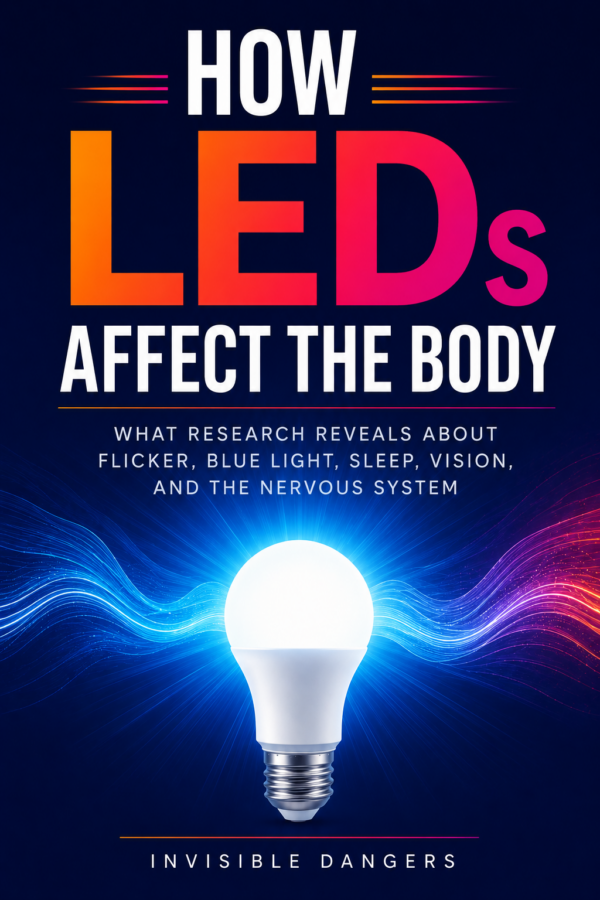
Within a short period of time, the way we light our homes, workplaces, streets, schools, and screens changed dramatically.
Traditional incandescent bulbs gave way to LEDs, promoted for their energy efficiency and long life. But LEDs don’t simply provide the same light using less electricity. They create and control light differently, introducing different wavelengths, spectral characteristics, and color frequencies that we’ve never been exposed to long term before.
How LEDs Affect the Body will take a closer look at the technology behind LED lighting and the growing body of research examining how artificial light interacts with the eyes, brain, sleep cycles, and nervous system.
The book will explore flicker, blue light, brightness, visual strain, migraines and headaches, sleep and circadian rhythms, neurological sensitivity, and why some people are more sensitive to artificial lighting than others.
It will also look back at how traditional incandescent bulbs produced light, how LEDs work differently, and why it’s relevant to human biology.
For people who experience unexplained sensitivities or discomfort around certain lights or screens, this book will offer a place to start asking better questions.
The book will also explore practical ways to evaluate and adjust everyday lighting, helping readers make more informed choices about the environments where they live and work.
When a technology becomes almost impossible to avoid, it is worth understanding how it works and how it may affect the human body.
Coming Soon
This title is currently in development and will be available soon from Invisible Dangers.



Reviews
There are no reviews yet.